Does Your Finasteride or Minoxidil Expire? What the Science Says About Medication Shelf Life and Treatment Outcomes
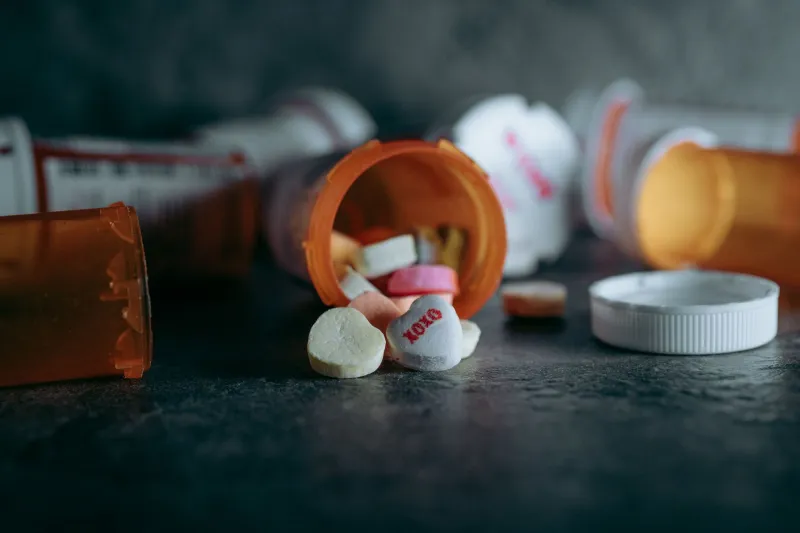
For patients managing hair loss on a long-term basis, medication costs are a persistent concern. Whether you are paying out of pocket for brand-name Propecia or sourcing a generic finasteride, the monthly expense accumulates quickly. It is no surprise, then, that some patients find themselves eyeing an old prescription bottle and asking a question that rarely makes it into a dermatologist's office: Is this still good?
The expiration date printed on a medication label is not arbitrary. It represents the manufacturer's guarantee — backed by stability testing data — that the drug will remain at or above 90 percent of its labeled potency under specified storage conditions until that date. What happens after that date, however, is more nuanced than a simple yes-or-no answer.
What Expiration Dates Actually Mean — and What They Do Not
The U.S. Food and Drug Administration (FDA) requires pharmaceutical manufacturers to conduct stability testing to establish a drug's shelf life. This testing involves exposing medications to controlled conditions — typically 25°C (77°F) with 60 percent relative humidity for standard storage, or accelerated stress conditions — and measuring potency at regular intervals.
The expiration date reflects the point at which testing data can no longer guarantee that the drug meets its labeled specifications. Crucially, it does not mean the medication becomes inert or dangerous at midnight on that date. In many cases, medications retain substantial potency well beyond their printed expiration. A widely cited study conducted by the FDA in collaboration with the U.S. military — the Shelf Life Extension Program — found that a significant percentage of tested drugs remained stable years past their expiration dates.
However, that research focused primarily on stockpiled medications stored under ideal, controlled conditions. The average patient's medicine cabinet is a different environment entirely.
How Finasteride Degrades Over Time
Finasteride, a 5-alpha reductase inhibitor available in 1 mg tablets (for hair loss) and 5 mg tablets (for benign prostatic hyperplasia), is a relatively stable small-molecule compound. Published stability data from pharmaceutical manufacturers generally support a shelf life of two to three years from the date of manufacture under proper storage conditions — typically defined as room temperature, away from moisture and light.
Degradation in finasteride occurs primarily through hydrolysis, a chemical process accelerated by moisture exposure. As the active compound breaks down, it forms degradant byproducts that are pharmacologically inactive. This means that a tablet stored in a humid environment — such as a bathroom medicine cabinet — may lose measurable potency before its printed expiration date, not after it.
The practical implication is significant: the expiration date assumes ideal storage. If your finasteride has been sitting in a steamy bathroom for 18 months, the effective shelf life may already be compromised, regardless of what the label reads.
Minoxidil: A More Sensitive Compound
Minoxidil presents a somewhat different stability profile. Available as a topical solution (2% and 5%) and, more recently, as an oral formulation, minoxidil's stability is influenced heavily by its vehicle — the base in which the active ingredient is suspended.
Topical minoxidil solutions typically contain propylene glycol and ethanol as carriers. These components can evaporate over time if bottles are not sealed properly, altering the concentration of the active ingredient. Additionally, minoxidil itself is susceptible to oxidative degradation when exposed to air and light. Foam formulations, which have become popular for their ease of application and reduced scalp irritation, may be particularly sensitive to temperature fluctuations, as the propellant systems can be affected by heat.
Oral minoxidil, which has gained traction as an off-label treatment for androgenetic alopecia, follows more conventional tablet stability parameters — but again, moisture and heat remain the primary enemies of potency.
Using degraded minoxidil does not carry the same safety risks as using a degraded antibiotic or a narrow-therapeutic-index drug. The concern is efficacy, not toxicity. A patient applying a minoxidil solution that has lost 20 to 30 percent of its potency through improper storage or age may be unknowingly under-treating their condition — and attributing the resulting stall in progress to a treatment failure rather than a product quality issue.
The Real-World Risk: Compromised Results Without Knowing It
This is the crux of the clinical concern. Hair loss treatments like finasteride and minoxidil require consistent, adequate dosing over months and years to produce and maintain results. The therapeutic threshold matters. A patient who is consistently delivering a sub-therapeutic dose — because their medication has degraded — may experience slower regrowth, accelerated shedding, or a plateau that mimics treatment resistance.
Unlike an antibiotic, where treatment failure produces a relatively clear clinical signal (the infection persists), the feedback loop in hair loss treatment is slow and ambiguous. Patients may wait six months before concluding that something has gone wrong, and by that point, additional hair follicle miniaturization may have occurred.
The cost-conscious decision to use an expired or improperly stored supply may, paradoxically, cost more in the long run — both financially, through the need for salvage therapies or hair restoration procedures, and clinically, through irreversible follicle loss.
Storage Best Practices That Extend Real-World Shelf Life
For patients who want to protect the integrity of their medication supply, storage conditions are not a minor detail — they are a clinical variable. The following recommendations align with FDA guidance and manufacturer labeling:
- Keep medications at room temperature. For most hair loss medications, this means between 68°F and 77°F (20°C–25°C). Brief excursions to slightly higher temperatures are generally acceptable, but sustained heat exposure — such as leaving medication in a hot car or near a radiator — accelerates degradation.
- Avoid the bathroom medicine cabinet. Despite being the most common storage location, bathrooms generate humidity spikes with every shower. A bedroom drawer, linen closet shelf, or kitchen cabinet away from the stove are preferable alternatives.
- Keep containers tightly sealed. Exposure to ambient air introduces moisture and oxygen, both of which drive chemical degradation.
- Protect from direct light. UV radiation can catalyze chemical reactions in certain compounds. Most manufacturer packaging is designed to block light, but transferring medications to clear containers negates this protection.
- Do not stockpile excessively. Ordering a six-month supply at once may offer cost savings, but only if storage conditions are genuinely optimal. A three-month supply used promptly often represents lower clinical risk than a six-month supply that sits under suboptimal conditions.
When to Discard and When to Consult Your Provider
If you have a supply of finasteride or minoxidil that is past its expiration date, the medically conservative recommendation is to discard it and obtain a fresh supply. This is particularly true if the medication has been stored in a bathroom or has been exposed to heat or humidity.
If you are in a situation where cost is a genuine barrier to maintaining your prescription — a concern that affects a substantial number of Americans managing chronic conditions — the appropriate step is to discuss this directly with your prescribing provider or pharmacist. Options may include switching to a lower-cost generic, exploring manufacturer patient assistance programs, or adjusting your prescription frequency to minimize the risk of accumulating unused stock.
What is not advisable is silently stretching a supply past its recommended use date and then attributing any subsequent changes in your hair loss trajectory to the medication itself.
The Bottom Line
Expiration dates on finasteride and minoxidil are not bureaucratic formalities. They reflect real pharmacological data about drug stability under defined conditions — conditions that patient storage habits frequently fail to replicate. While expired medication is unlikely to cause harm in the way that, say, a degraded injectable might, the more relevant risk is therapeutic: you may be treating your hair loss with a product that no longer delivers what the label promises.
For a condition in which consistent, adequate dosing is the cornerstone of long-term success, that is a risk worth taking seriously.