Not All Hair Loss Is the Same: How to Recognize When Your Diagnosis May Be Wrong
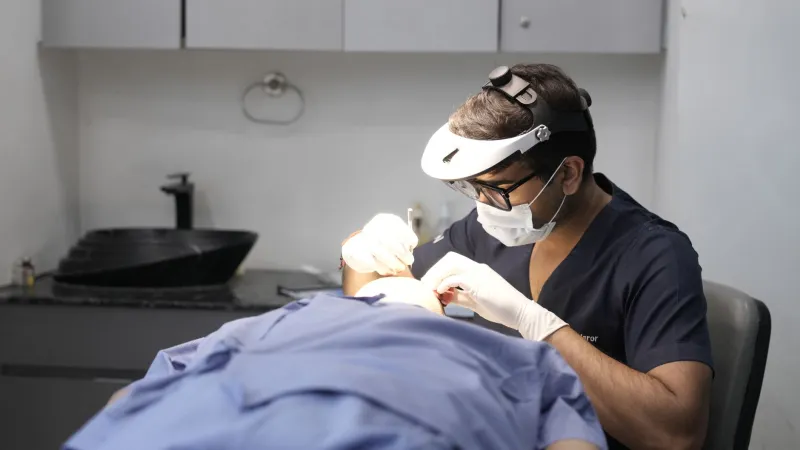
For many Americans, the path from noticing hair loss to filling a prescription follows a familiar and often rushed sequence: a brief office visit, a quick visual inspection, and a recommendation for finasteride or minoxidil. While those medications remain clinically validated options for androgenetic alopecia—the most common form of hair loss in both men and women—they offer little to no benefit when the underlying cause is something else entirely.
The uncomfortable reality is that hair loss has dozens of potential causes, and the symptoms can look deceptively similar on the surface. If your treatment plan was built on an incomplete or incorrect diagnosis, you may not just be wasting time and money. You could be allowing a treatable—and occasionally serious—condition to progress unchecked.
Why Misdiagnosis Happens More Often Than You'd Think
Androgenetic alopecia accounts for the majority of hair loss cases seen in clinical settings, which creates a natural diagnostic bias. Physicians, particularly those in primary care rather than dermatology, are accustomed to seeing it and may default to that diagnosis without conducting a thorough differential evaluation. A busy appointment schedule doesn't help. Scalp examinations that take less than two minutes rarely capture the nuance required to distinguish between hair loss types that can appear visually similar.
Patients themselves contribute to this dynamic. Self-diagnosis via internet searches frequently leads individuals to arrive at an appointment already convinced they have pattern baldness. That assumption, once stated aloud, can subtly shape how a clinician frames what they're seeing.
The Conditions Most Commonly Mistaken for Androgenetic Alopecia
Telogen Effluvium
This condition involves a widespread shedding of hair triggered by physiological stress—illness, surgery, significant weight loss, nutritional deficiency, or hormonal changes such as those following childbirth or discontinuing oral contraceptives. Unlike androgenetic alopecia, which produces gradual, patterned thinning, telogen effluvium typically causes diffuse shedding across the entire scalp and often resolves on its own once the triggering factor is addressed.
The critical distinction: telogen effluvium is frequently temporary. A patient who begins finasteride for what appears to be pattern hair loss, but is actually experiencing post-illness shedding, may attribute any eventual recovery to the medication rather than natural resolution—and remain on a drug they never needed.
Alopecia areata is an autoimmune condition in which the immune system mistakenly attacks hair follicles, producing patchy, often circular areas of hair loss. It can affect any part of the scalp and, in more severe forms, may extend to eyebrows, eyelashes, and body hair.
This condition does not respond to finasteride or minoxidil in the same way that androgenetic alopecia does. Its treatment typically involves corticosteroid injections, topical immunotherapy, or—more recently—JAK inhibitor medications. An alopecia areata patient who goes undiagnosed may spend years on the wrong therapy while the condition advances.
Commonly known as scalp ringworm, tinea capitis is a fungal infection that can produce patchy hair loss, scaling, and inflammation. It is far more prevalent in children but does occur in adults, and it is sometimes misread as inflammatory dandruff or early-stage alopecia. The treatment is antifungal medication—not DHT blockers or vasodilators. Delaying the correct diagnosis allows the infection to persist and potentially cause scarring.
Scarring Alopecias
Conditions such as lichen planopilaris and frontal fibrosing alopecia fall under the category of cicatricial (scarring) alopecias. These are progressive inflammatory disorders that permanently destroy hair follicles. Early intervention can slow progression, but the window for effective treatment is limited. Because the early stages may resemble ordinary thinning or recession, patients who are incorrectly told they have androgenetic alopecia may not receive the anti-inflammatory treatments that could preserve remaining follicles.
What a Proper Diagnostic Workup Actually Looks Like
A thorough evaluation of hair loss goes well beyond a visual glance. The following components are considered standard in a comprehensive dermatological assessment:
- Detailed medical and family history: When did shedding begin? Was there a preceding illness, dietary change, medication adjustment, or period of extreme stress? Is there a family history of autoimmune conditions as well as pattern baldness?
- Scalp dermoscopy: This non-invasive technique uses a handheld magnifying device to examine the scalp at high magnification, revealing follicular miniaturization patterns, scaling, inflammation, or other structural details invisible to the naked eye.
- Pull test: A gentle tug on a small cluster of hairs can help determine whether active shedding is occurring and roughly quantify its severity.
- Laboratory work: Blood panels checking thyroid function, iron levels, ferritin, vitamin D, zinc, and hormonal markers (including androgens) can identify systemic causes that manifest as hair loss.
- Scalp biopsy: In ambiguous cases, a small tissue sample can confirm or rule out inflammatory and scarring conditions with a high degree of accuracy.
If your initial consultation did not include most of these steps—or if you were diagnosed based solely on appearance—it is entirely reasonable to request a more thorough evaluation or seek a second opinion from a board-certified dermatologist.
When to Push Back on Your Initial Diagnosis
Certain clinical scenarios should prompt you to question whether a pattern hair loss diagnosis is truly accurate:
- Hair loss that appeared suddenly over a period of weeks rather than gradually over years
- Shedding that is diffuse across the entire scalp rather than concentrated at the crown or hairline
- Visible patches of complete hair absence rather than general thinning
- Scalp symptoms such as itching, burning, tenderness, or visible scaling
- Hair loss occurring in the context of a recent illness, surgery, or major life stressor
- Concurrent symptoms elsewhere in the body, such as joint pain, fatigue, or skin changes
- Lack of any meaningful response after six to twelve months on a correctly administered treatment
Advocating for yourself in a clinical setting is not confrontational—it is sound medical practice. Requesting a dermatology referral or asking for bloodwork to rule out systemic causes is entirely appropriate, particularly if your current treatment trajectory is producing no results.
The Downstream Consequences of Getting It Wrong
The stakes of a missed or incorrect hair loss diagnosis extend beyond cosmetic frustration. Scarring alopecias, left untreated, cause permanent follicle destruction that no medication can reverse. Fungal infections can spread to other individuals, particularly in household settings. Autoimmune conditions like alopecia areata may signal a broader immune dysregulation worth monitoring. And nutritional deficiencies driving telogen effluvium can affect systems well beyond the scalp if they remain unaddressed.
Finasteride and minoxidil are effective, evidence-based treatments—but only for the condition they were designed to treat. Applying them to a misdiagnosed case does not merely fail to help; it occupies the time, attention, and financial resources that could be directed toward a therapy that would actually work.
A Final Word on Informed Patienthood
The goal of this guidance is not to create anxiety about your current diagnosis, but to reinforce a principle that underpins all responsible medical care: the right treatment begins with the right diagnosis. If you have confidence in your diagnosis and are responding well to your current regimen, that is a genuinely positive outcome. But if something about your situation does not fit the expected pattern—if the timeline is unusual, the shedding is diffuse, or the treatment simply isn't working—trust that instinct and pursue clarity.
Hair loss is rarely a single-answer problem. Approaching it with the same rigor applied to any other medical condition is not excessive. It is exactly what you deserve.


