Is Your Daily Routine Working Against Your Hair Loss Medication? A Closer Look at Scalp Health Habits
Most patients who start a hair loss medication focus almost entirely on the prescription: the dosage, the frequency, the expected timeline. What receives considerably less attention is the environment into which that medication is introduced—specifically, the scalp itself. A follicle operating in an inflamed, product-laden, or mechanically stressed environment is not a follicle operating at full capacity. And a medication applied to a compromised scalp is, in practical terms, a medication working at a disadvantage.
This is not a theoretical concern. Scalp health is a legitimate clinical variable in hair loss treatment outcomes, and the habits most likely to undermine it are among the most common in everyday American grooming routines.
The Inflammation Problem: What Your Shampoo May Be Doing to Your Follicles
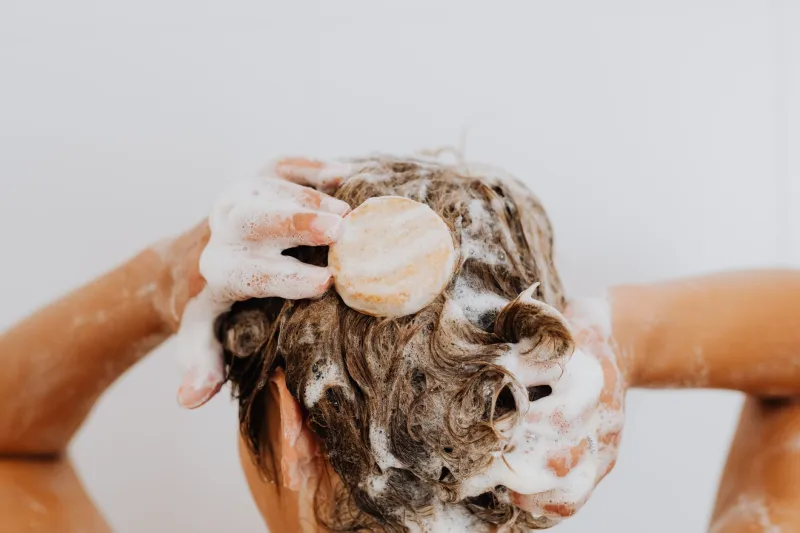
Dandruff shampoos are among the most commonly used scalp-care products in the United States, and for good reason—seborrheic dermatitis and dandruff are genuinely prevalent conditions that, left unmanaged, can contribute to follicular inflammation. The paradox is that some of the ingredients used to treat dandruff can, in certain concentrations or with overuse, introduce their own form of irritation.
Zinc pyrithione and selenium sulfide, two of the most widely used active ingredients in anti-dandruff formulations, are generally well-tolerated. However, daily use of highly concentrated formulas, or failure to rinse thoroughly, can leave residue that disrupts the scalp's natural pH and microbiome. Ketoconazole shampoos—which have some evidence supporting their use as adjunctive therapy in androgenetic alopecia—should similarly be used according to label directions rather than daily, unless specifically instructed by a physician.
Sodium lauryl sulfate (SLS), a foaming agent present in a wide range of shampoos, has been associated with scalp irritation and barrier disruption in sensitive individuals. While it is not harmful for most users, those who notice persistent redness, itching, or flaking after washing may benefit from switching to a sulfate-free formulation. Chronic low-grade scalp irritation, regardless of its cause, creates an environment that is suboptimal for follicular function.
Practical guidance: wash your hair as frequently as your scalp requires, not according to a fixed schedule. Oily scalps may benefit from daily washing; drier scalps may do better with every other day or less. The goal is a clean, calm scalp—not a stripped one.
Product Buildup and Minoxidil Absorption
For patients using topical minoxidil, scalp cleanliness is not merely an aesthetic concern—it is a pharmacological one. Minoxidil requires absorption through the scalp to reach the follicles where it exerts its vasodilatory effects. A scalp coated in dry shampoo, styling gel, hairspray, or heavy conditioner is a scalp with reduced permeability.
Dry shampoo, in particular, has become a staple of American hair care culture. Its convenience is undeniable. Its compatibility with topical minoxidil treatment is less so. Applying minoxidil to a scalp that has not been properly cleansed—or allowing minoxidil to sit under a layer of product—meaningfully reduces the medication's bioavailability at the follicular level.
The general recommendation is to apply topical minoxidil to a clean, dry scalp and to allow adequate absorption time before applying any other products. Most formulations suggest waiting at least four hours before washing the scalp again. Patients who use minoxidil twice daily should build their grooming routine around these windows rather than the reverse.
Heat Styling: More Than a Cosmetic Concern
Flat irons, blow dryers, and curling wands are fixtures in millions of American households. At high temperatures and with frequent use, these tools can cause direct thermal damage to the hair shaft—but the scalp itself is also vulnerable. Repeated heat exposure at the skin surface can exacerbate existing inflammation, accelerate transepidermal water loss, and compromise the structural integrity of the follicular environment.
For patients already managing androgenetic alopecia, where follicles are operating under hormonal stress, adding thermal stress to the equation is counterproductive. This does not mean eliminating heat styling entirely. It does mean using the lowest effective temperature setting, maintaining adequate distance between the tool and the scalp, and applying a heat protectant to the hair shaft before styling.
Blow-drying on a cool or warm setting, rather than high heat, is a simple adjustment that most patients can make without meaningful disruption to their routine. The cumulative benefit to scalp health over months and years of treatment is not trivial.
Tight Hairstyles and Traction: A Mechanical Threat to Follicles
Traction alopecia—hair loss caused by prolonged mechanical tension on the follicle—is a well-documented clinical entity. But even in patients whose primary diagnosis is androgenetic alopecia, habitual tight hairstyles can compound follicular stress in ways that undermine treatment progress.
Ponytails, buns, braids, and extensions worn consistently at high tension exert physical force on the hair follicle and its surrounding tissue. In follicles already sensitized by DHT exposure, this added mechanical burden can accelerate miniaturization. Patients who wear their hair in tight styles daily and wonder why their hairline continues to recede despite medication compliance should consider whether traction is a contributing variable.
Loosening hairstyles—or alternating between styles to distribute tension—is a low-cost, zero-risk modification that may contribute meaningfully to a better treatment environment.
Stress, Cortisol, and the Follicular Clock
Chronic psychological stress elevates cortisol, which in turn can trigger or worsen telogen effluvium—a condition in which hair follicles prematurely enter the resting phase and shed. In patients on finasteride or minoxidil for androgenetic alopecia, a concurrent stress-induced telogen effluvium can mask treatment progress and generate the disheartening impression that medication is failing.
Stress management is not always within a patient's immediate control, and this article does not suggest otherwise. However, recognizing that stress has a direct physiological effect on hair cycling is clinically useful. If shedding accelerates during a period of significant life stress—a job change, a bereavement, a major illness—that context should be communicated to your provider. It may alter the interpretation of your treatment trajectory considerably.
Building a Scalp-Supportive Routine
The goal is not perfection—it is optimization. A few targeted adjustments to your daily routine can meaningfully improve the environment in which your hair loss medication operates:
- Choose gentle, pH-balanced shampoos appropriate for your scalp type and washing frequency
- Apply topical minoxidil to a clean, product-free scalp and allow adequate absorption time
- Reduce heat styling frequency and temperature where possible
- Avoid consistently tight hairstyles, particularly at the hairline and temples
- Manage scalp inflammation proactively, whether from seborrheic dermatitis, product sensitivity, or other sources
- Communicate stress-related shedding to your provider so it can be contextualized appropriately
Your prescription is one component of your treatment. The scalp it acts upon is another. Attending to both is what a complete, evidence-informed approach to hair loss care actually looks like.